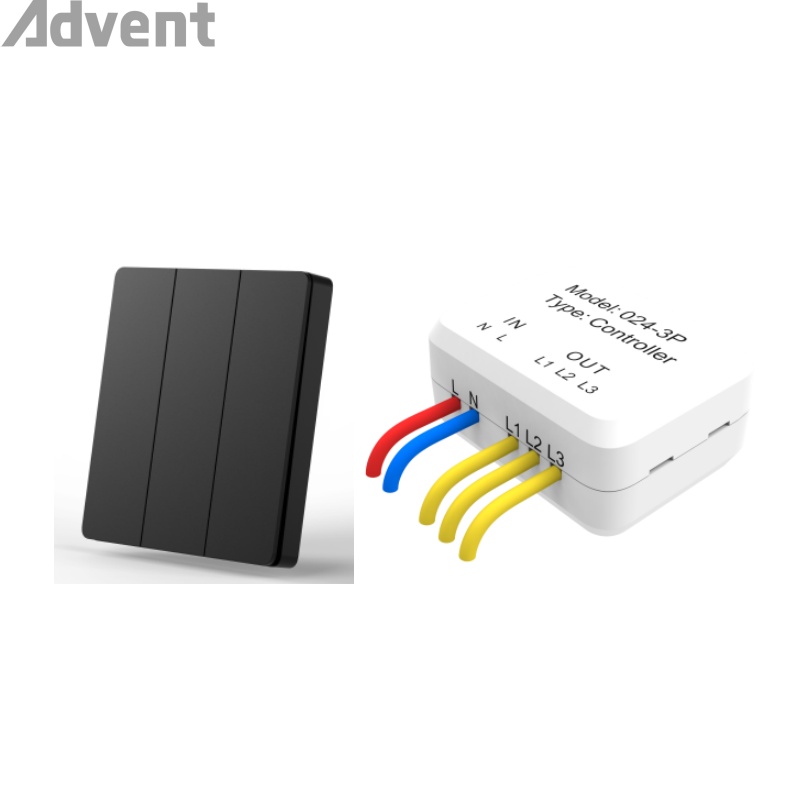
Under the wave of smart home, the intelligent lighting system has become popular, WIFI lighting controller and wireless lighting controller are often confusing, and their differences are as follows:
Technical principle: WIFI Kinetic Lighting Controller Switch is based on the common WIFI network in daily life. After the lamp is connected, the user can communicate with the cloud remotely through the smart device APP. For example, on the way from work, you can turn on the light in advance, and the instructions are sent to the built-in WIFI module of the lamp through the WIFI network and the router. Kinetic Lighting Controller Switch has a wider range, covering Bluetooth, ZigBee, Z-Wave and other technologies. Bluetooth is short-range communication, the device is directly paired with the lamp control; ZigBee and Z-Wave can be AD hoc networking, devices can be linked, such as sensors detect people, lights automatically turned on.
Signal coverage and transmission distance: In the average family, the WIFI signal of the ordinary wireless router has an effective coverage radius of 10-30 meters, and the signal is vulnerable to interference. Bluetooth transmission distance of 10 meters, ZigBee and Z-Wave transmission distance of 10-100 meters, but also can expand the coverage of the AD hoc network.
Number of device connections and compatibility: The upper limit of connected devices for home wireless routers is generally 10-30, and many devices are easy to jam, and the compatibility of different brands of apps is different. Bluetooth one-to-one connection, less connected devices; ZigBee and Z-Wave can form large-scale networks with good compatibility between different brands of devices.
Power consumption and stability: WIFI module continuous networking, high power consumption, network instability, lamp control is easy to delay or command loss. Bluetooth, ZigBee and Z-Wave are low-power technologies with strong anti-interference ability and stable data transmission.
Cost comparison: The price of WIFI module is close to the people, intelligent WIFI lamps are tens to hundreds of yuan more expensive than traditional lamps, and additional equipment may be required to enhance network coverage. Bluetooth lamp control cost is low, ZigBee and Z-Wave equipment due to complex technology, lamps and gateways and other equipment cost is high.
When choosing, consumers should combine their own needs, scenarios and budgets to select appropriate intelligent lighting control methods to create an ideal intelligent lighting environment.