

I. Power Source of the Wireless Doorbell Transmitter
The Basic Kinetic Wireless Doorbell transmitter of self-powered wireless doorbells adopts self-generating technology, a "black technology" that frees it from dependence on wires and batteries. When a visitor presses the transmit button on the transmitter, the kinetic energy is converted into micro-current through internal precision components.
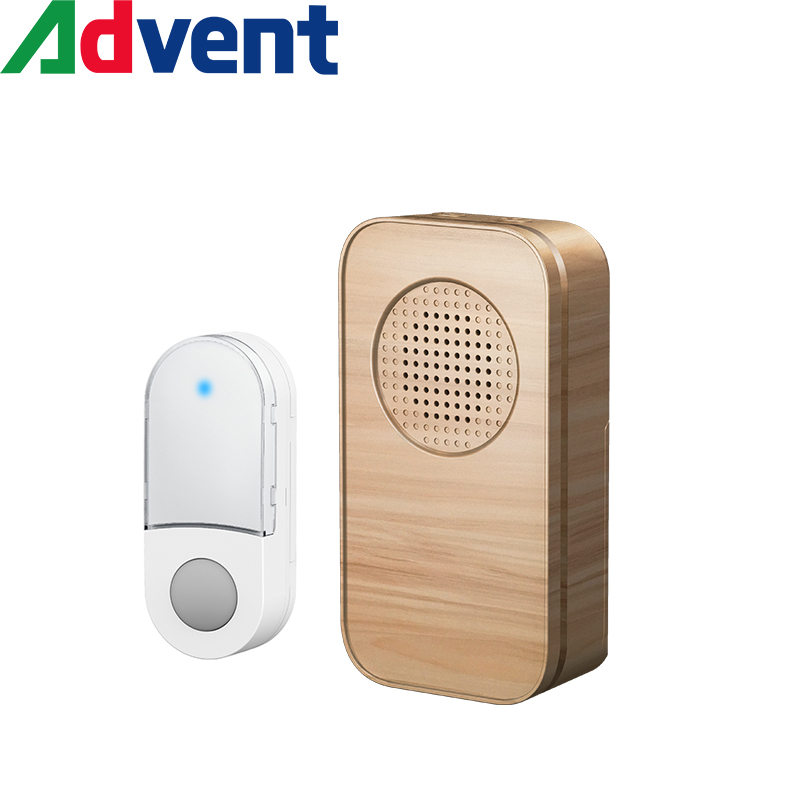
This process mainly relies on the principle of electromagnetic induction: the transmitter contains a built-in micro coil and permanent magnet assembly. Pressing the button drives the permanent magnet to move relative to the coil, cutting the magnetic field lines to generate induced current. After processing, this current powers the transmitter, enabling its radio frequency drive module to emit wireless signals. Self-generating technology is environmentally friendly, eliminating worries about dead batteries or leakage, and realizing green recycling of the doorbell transmitter.
II. Wireless Bridge for Signal Transmission
Economic Wireless Doorbells require no wiring, abandoning traditional physical transmission methods, so the stability of wireless signal transmission becomes a key factor. Wireless doorbells use radio frequency (RF) communication technology: the transmitter converts electrical energy into specific radio frequency signals (usually 433MHz) and propagates them through the air in the form of electromagnetic waves.
How do they avoid signal interference, resist external signal impacts, and ensure the uniqueness of reception? The radio frequency signals sent by the transmitter are embedded with exclusive identity codes and trigger instructions, like assigning an "ID card" to the signal. The receiver is equipped with a matching decoding chip that only recognizes corresponding signals and rejects other interference. Even if signals of the same frequency appear simultaneously, it can accurately distinguish them.
When wireless signals encounter obstacles such as doors, windows, or walls during transmission, wireless doorbells optimize radio frequency signals and penetration algorithms. By adjusting signal frequency and enhancing transmission power (in full compliance with industry standards), signals can bypass obstacles using the diffraction characteristics of electromagnetic waves, ensuring stable propagation.
III. How the Receiver Receives Signals
The receiver receives signals, decodes them, and then outputs audio. When no signal is received, the receiver stays in a low-power state. When its built-in radio frequency module captures a signal with a matching code, it compares it with the preset code library to confirm the signal’s uniqueness and legitimacy before triggering the audio playback instruction.
Wireless doorbells are equipped with built-in speakers and audio decoding chips. Advent’s wireless doorbells, for example, support 32 different ringtones and 4 adjustable volume levels, meeting diverse volume needs in various scenarios.