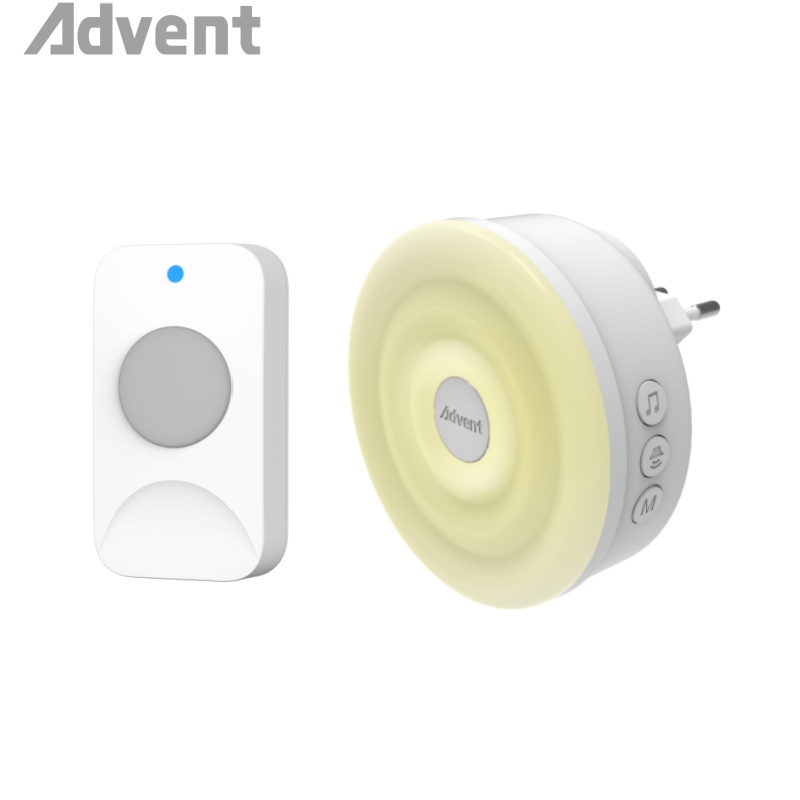
In the past, many households used wired doorbells, which required wiring, wall chiseling, and professional installation. Nowadays, wireless doorbells are gradually becoming popular in the market. There are various types of Basic Wireless Doorbell, such as Kinetic Mini Wireless Doorbell, Wireless Plug-Through Doorbell, Battery Operated DC Doorbell, and Colorful Doorbell. Faced with so many types, people are unclear about their working modes and worry that wireless doorbells, without wires, may have poor signals or fail to work through walls.
In fact, there is no need to worry. Wireless doorbells have built - in signal transmission. Whether they can penetrate walls mainly depends on their signal transmission methods, as well as the material and thickness of the walls. Many wireless doorbells use infrared signals and radio frequency (RF) signals for transmission. Generally, RF signals can penetrate walls for transmission. Ordinary brick walls, wooden doors, etc., will not block the signals. However, if the walls are thick, dense, and there are many obstacles, such as large metal furniture and large metal appliances, the signal may weaken, leading to shortened transmission distance or delay. In contrast, infrared signals have relatively weak wall - penetration capability and are easily blocked by walls and furniture.
Overall, mainstream RF wireless doorbells can meet the needs of common households. However, to ensure longer signal transmission, it is recommended to minimize obstacles between the wireless doorbell transmitter and receiver during installation.