

Does a Wireless Doorbell Consume More Power Because It Doesn’t Require Wiring?
Amid the wave of smart electronic products, wireless doorbells have become the preferred choice for more users due to their wire-free design, easy installation (no need for professional electricians—users can install them themselves), and rich functionality. However, many people still have questions about the power consumption of wireless doorbells. Though small in size, a wireless doorbell’s power usage is closely related to each household’s operating costs. Next, we will uncover the truth about the power consumption of wireless doorbells, a key product in home security.
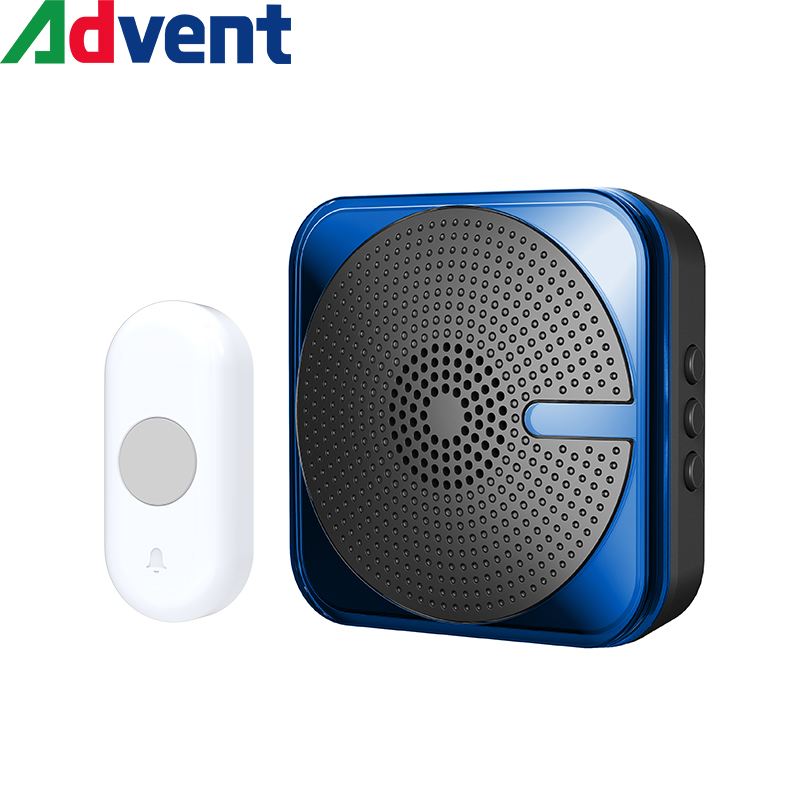
Long Range Wireless Doorbell Kit consists of a transmitter and a receiver, and their power consumption differs due to their distinct functions. The Ring Wireless Door Bell transmitter typically adopts kinetic energy generation technology. For example, Advent’s Basic Kinetic Wireless Doorbell converts kinetic energy into electrical energy to trigger signal transmission. This process consumes an extremely small amount of power—since it requires no continuous power supply, its power consumption is essentially zero, resulting in no electricity costs.
The receiver, however, is the main power consumer due to its functional requirements. Its internal components usually include a chip, a speaker, and indicator lights. Taking a common receiver with 32 selectable ringtones and LED indicators as an example: during standby mode, it needs to maintain signal reception, so its power consumption ranges from a few microamps to dozens of microamps. When the doorbell rings, the speaker activates and the indicator light flashes, causing power consumption to increase significantly—though the power used for a single ring is generally at the milliwatt level. If the receiver is equipped with features like self-learning anti-interference or multi-mode adjustment, the chip’s operations will increase energy consumption. Nevertheless, reputable brands optimize power management to minimize such additional consumption.
Compared with traditional wired doorbells, wireless doorbells have significant advantages. Traditional wired doorbells involve high wiring costs and poor flexibility, and their transformers also consume power during standby. While wireless doorbells do use batteries, their overall power consumption is far lower than that of wired doorbells. Whether judging from the low-power design of their components, actual test data, or industry optimization trends, wireless doorbells are “energy-saving performers.” Their power consumption is much lower than that of common household electrical devices (such as routers and smart lights), yet they deliver convenient and intelligent interactive experiences.
As technology continues to advance, the power efficiency of wireless doorbells will only improve further. They will become “invisible and worry-free” additions to smart homes, allowing users to enjoy the benefits of technology without concerns about power consumption.